Wooden and plastic pallets – basic information

In logistics and warehousing, pallets are an integral part of everyday work. They facilitate transport and storage, and optimise processes related to the trade of goods. There are two main types of pallets on the market: wooden and plastic. Each has its advantages, disadvantages and specific applications. Today, we will analyse both types to help you make an informed choice.

Traditional wooden pallets

Wooden pallets are the oldest and still the most popular type of pallets used worldwide. They are mainly made of various types of wood, such as pine, spruce or oak. They have their advantages and disadvantages, but they remain the most popular choice in many industries.

Advantages of wooden pallets:

  • price – wooden pallets are usually cheaper to purchase than plastic ones, which makes them an attractive solution, especially for companies that use pallets on a large scale;
  • strength and load capacity – well-made wooden pallets can bear heavy loads (usually up to 1,000 or even 1,500 kg), which allows for the transport of many types of products;
  • repairability – damaged wooden pallets can be repaired quickly and easily; replacing individual boards is relatively inexpensive;
  • universality – this is the most common type of pallet used for storage and transport, so they are easy to buy or hire.

Disadvantages of wooden pallets:

  • weight – wooden pallets are heavier than plastic ones, which may increase transport costs;
  • water absorption and hygiene – wood is not resistant to moisture, so such pallets must be properly protected; pallets made of wood are also more susceptible to mould, fungi and dirt;
  • limited durability – wooden pallets wear out faster than plastic ones due to weather and mechanical factors;
  • safety hazard – splinters or protruding nails may pose a hazard to employees.

Plastic pallets

Modern plastic pallets are gaining popularity thanks to their durability and specific functional characteristics. They are made of various plastics, such as polypropylene (PP) or high-density polyethylene (HDPE). Compared to wooden pallets, they have a number of advantages that are worth learning more about.

Advantages of plastic pallets:

  • higiena – palety plastikowe są łatwe w czyszczeniu i dezynfekcji, co czyni palety idealnymi do zastosowań w branży spożywczej, farmaceutycznej czy medycznej;
  • long service life – these types of pallets are resistant to moisture, mould, fungi and many chemicals, which extends their service life even with intensive use;
  • low weight – these carriers are lighter than traditional pallets, which allows for savings during transport;
  • safety – plastic pallets have no sharp edges, nails or splinters, which minimises the risk of injury;
  • ecology – plastic pallets can be recycled, so they are more environmentally friendly.

Other advantages include no maintenance requirements. In addition, they are more resistant to mechanical damage, extremely hygienic and easy to disinfect, making them a particularly good choice for the food and pharmaceutical industries. They also take up less space in storage, making them an ideal alternative to wooden pallets.

Disadvantages of plastic pallets:

  • price – the production of plastic pallets is not as popular, which increases their cost;
  • lower load capacity – plastic pallets are usually less resistant to very heavy loads (although reinforced models are available);
  • less popular – they are less commonly used in international or local transport, which is why many companies prefer to choose traditional pallets.

The use of plastic and wooden pallets

Wooden pallets are ideal for transporting and storing food products, building materials and heavy items. They are also commonly used in local logistics and in cases where pallets are intended for short-term use.

Plastic pallets, on the other hand, are particularly valued in industries requiring high hygiene standards, in the transport of food products, pharmaceuticals, electronics and wherever quick and frequent disinfection is required. They contribute to environmental protection and reduce the cost of transporting goods, making them an excellent choice for eco-friendly businesses.

When should you use a plastic pallet, and when should you use a wooden one?

The choice between wooden and plastic pallets depends on many factors, such as budget, the specific nature of the goods, hygiene and environmental requirements, and the planned period of use. It should also be taken into account that used pallets can be purchased, which are cheaper but more susceptible to damage. If you want your company’s supply chain to be optimised and more environmentally friendly, it is better to choose plastic pallets.

Streamline your company’s logistics processes by choosing pallets that are environmentally friendly, functional and lightweight. To learn more about plastic pallets, please contact us.

Plastic pallets – basic information

Before answering the question of whether plastic pallets are environmentally friendly, it is worth learning more about them – their applications, characteristics, etc. Such pallets are usually made from recycled materials, i.e. processed plastics such as HDPE or PP (polypropylene). They are safer and more resistant to external factors than wooden pallets. In addition, they are less susceptible to damage, easier to keep clean and long-lasting. Furthermore, they do not require frequent repairs and do not splinter. It also turns out that this is an extremely environmentally friendly solution that can significantly reduce a company’s carbon footprint.

Are plastic pallets environmentally friendly?

Poprzez wybór palet plastikowych wspierasz gospodarkę o obiegu zamkniętym i zrównoważony rozwój, Palety plastikowe są uznawane za przyjazne dla środowiska głównie ze względu na swoją długą trwałość, możliwość wielokrotnego użytku oraz recyklingu, co znacząco zmniejsza ich wpływ na środowisko naturalne. Dzięki odporności na czynniki zewnętrzne, szkodniki i pleśnie, plastikowe palety mają dłuższy cykl życia niż palety drewniane, co ogranicza produkcję odpadów i emisję CO2 związaną z częstą wymianą palet.

Longevity and durability

Plastic pallets are extremely durable and resistant to factors such as moisture, pests, fungi and mechanical damage. This durability means that they can be used for many years, which means that they need to be replaced much less frequently, thereby reducing waste and the consumption of primary raw materials. Less waste means less impact on the environment.

The pallet recycling process

Used plastic pallets can be recycled. High-quality polyethylene or other biodegradable plastics can be recycled and reused in the production of pallets. Recycling is less energy-intensive than the production of new pallets, which further reduces the carbon footprint of these products.

Reducing greenhouse gases

The production of plastic pallets tends to be less energy-intensive than the production of wooden pallets, which requires tree felling, drying and wood processing. In addition, plastic pallets are lighter, allowing for more economical transport with lower fuel consumption and carbon dioxide emissions. It is also worth mentioning pallet pooling systems, which reduce the environmental impact.

Łatwość utrzymania czystości

Pallets made from recycled materials contribute to environmental protection because they reduce the use of cleaning chemicals. Plastic pallets are used in the food and pharmaceutical industries, where maintaining high standards of hygiene is very important.

Comparison of plastic and wooden pallets

High-density HDPE pallets are usually lighter and more environmentally friendly than their traditional counterparts. Above all, they play a key role in the food and pharmaceutical industries, where hygiene is very important. In addition, they can be reused multiple times and easily recycled. This means that they minimise waste and reduce the amount of fuel needed for transport. The benefits of plastic pallets are therefore tangible for the transport and warehousing industries, as well as any other industry that decides to use them.

Reduced carbon footprint

As a result, due to their longer durability, lower weight, full recyclability and more efficient transport, plastic pallets generate a smaller carbon footprint throughout their life cycle compared to wooden pallets. However, wood, as a renewable and CO2-absorbing raw material, has its own significant environmental advantages. Therefore, each of these types of pallets has its pros and cons, although when it comes to environmental friendliness, plastic pallets are definitely the winners.

What else should you know about plastic pallets?

The use of plastic pallets has a significant impact on the environment. Their reliability, low weight and versatility are extremely important in logistics, storage and transport. At the same time, this reduces their negative impact on the environment. The manufacturing process itself is also more environmentally friendly, as it can use recycled materials and less new plastic.

It is worth noting that plastic pallets also meet EU standards regarding dimensions, for example, so they are a great alternative to classic pallets in this respect as well. In addition, they are more durable and resistant to moisture, mechanical damage, mould and pests. This means they can be used for many years without the need for maintenance or repairs, which is often the case with wooden pallets. Furthermore, plastic pallets are lighter (usually weighing about 10 kg less than wooden ones), which reduces transport costs, especially over long distances.

If you would like to learn more about innovative plastic pallets, please contact us. We will be happy to tell you more about this logistics carrier, which is suitable for most loads and industries. If you are looking for environmentally friendly and modern solutions, plastic pallets are the ideal choice.

Plastic pallets – basic information

Plastic pallets are modern and durable goods carriers that are becoming increasingly popular in logistics and warehousing. They are primarily used in the food and pharmaceutical industries, but also in any other industry where the highest standards of hygiene are important. They are lightweight, moisture-resistant and easy to keep clean, making them an excellent alternative to wooden pallets. In addition, they are safer, take up less space and are still suitable for transporting heavy loads.

Unlike traditional wooden pallets, plastic pallets are more durable and can be reused multiple times. At the end of their life cycle, they are 100% recyclable, supporting companies’ environmental initiatives.

Types of plastic pallets

Plastic pallets can be categorised primarily according to their dimensions, construction and specific applications.

Euro pallets

Euro pallets, or EUR pallets, are the most commonly used pallets in Europe. Their standard dimensions are 1200×800 mm. They work well in most storage systems and can be transported by various pallet trucks.

American pallets

Also known as ISO, industrial or universal pallets. They measure 1200×1000 mm. They are also very popular, especially on international markets.

Half pallets

Smaller, used for light loads and in limited storage spaces. Their dimensions are 800×600 mm.

Hygienic pallets

Palety higieniczne H1 to specjalistyczne rozwiązanie, stosowane w branży spożywczej i farmaceutycznej, zapewniające najwyższe standardy czystości. Mogą mieć różne wymiary, ale standardowo są wykonane z plastiku. Odporne na rozwój pleśni. Idealne do produktów wymagających maksymalnej czystości.

Skid and foot pallets

They differ in their load-bearing structure, which affects their use in warehouses and facilitates handling with forklift trucks.

Anti-slip pallets

They have a surface that prevents loads from shifting during transport. This is an excellent logistical solution that is becoming increasingly popular in the food industry.

Disposable pallets

These are plastic pallets designed for single use. They are mainly used for one-off transport of goods when returning the pallet is uneconomical, impossible or unnecessary.

ESD antistatic pallets

Plastic pallets are also available in specialised versions, such as ESD antistatic pallets, which protect transported electronic products from electrostatic discharge.

Openwork pallets

Charakteryzują się otworami w blacie, są lżejsze i łatwiejsze do czyszczenia. Są ergonomiczne i stosowane w różnych branżach. Więcej szczegółów znajdziesz na palety ażurowe.

Export pallets

Specjalny rodzaj palety przeznaczony do transportu towarów poza granice kraju, zaprojektowany tak, by spełniać międzynarodowe standardy i normy, w tym regulacje fitosanitarne.

Material and pallet durability

Plastic pallets guarantee the efficiency and safety of logistics processes. They are durable, resistant to mechanical damage and weather conditions, and their design facilitates the automation of warehouse processes, which translates into time and cost savings. Thanks to their reusability and easy recyclability, plastic pallets are in line with the trends of sustainable development and ecology in the transport and warehousing industries. Their wooden counterparts, although very popular, are not as safe, stable and durable. In addition, they are not resistant to chemical treatment and cleaning. The use of plastic pallets is definitely more widespread.

Choosing the right plastic pallet

You already know the characteristics of plastic pallets. Despite their low weight, they are resistant to heavy loads and damage, so they are suitable for almost any industry. They can significantly reduce your carbon footprint and transport costs. That is why they are the best solution for plastic packaging. There is a wide selection of plastic pallets on the market, so you can easily choose the model that is right for your industry.

Ultimately, the choice of the right type of pallet depends on the company’s needs, the type of goods transported, and the storage and transport conditions. For example, metal pallets are a better choice in the automotive industry, while box pallets are better for bulk products. The variety of models available allows pallets to be optimally matched to logistical requirements, which increases safety and work efficiency.

We manufacture modern plastic pallets that are compatible with most forklifts and transport equipment. We guarantee the highest quality, environmental friendliness and a wide range of products.

LIBRA PARTNERS is the result of the search for solutions that will enable us to offer an innovative product, not yet offered by other entities.

LIBRA PARTNERS aims to be a key player in sustainable development, a concept that will undoubtedly shape the company’s guidelines for the coming generation by producing innovative transport pallets from recycled materials.

LIBRA PARTNERS recycled plastic pallets aim to improve the environmental impact of our customers’ logistics operations by using them in the following aspects:

  • Reduction of CO2 emissions in freight transport thanks to lower fossil fuel consumption, given their lower weight compared to alternative wooden pallets.
  • Balancing the amount of waste produced with the amount of waste recovered. Each of our solutions gives a new life cycle to waste from other uses, such as packaging.
  • Elimination of waste at the end of its useful life through recycling of our solutions, which never end up in landfills.
  • Reducing the carbon footprint of logistics operations by reducing fuel and energy consumption by means of transport, as well as thanks to a longer life cycle compared to wooden pallets.

LIBRA PARTNERS, thanks to the production of pallets from recycled HDPE raw material, perfectly fits into the principles of Sustainable Development, Circularity and the 6R Principles.

Register and participate in an event that sets logistics trends- https://lnkd.in/dmihwy74

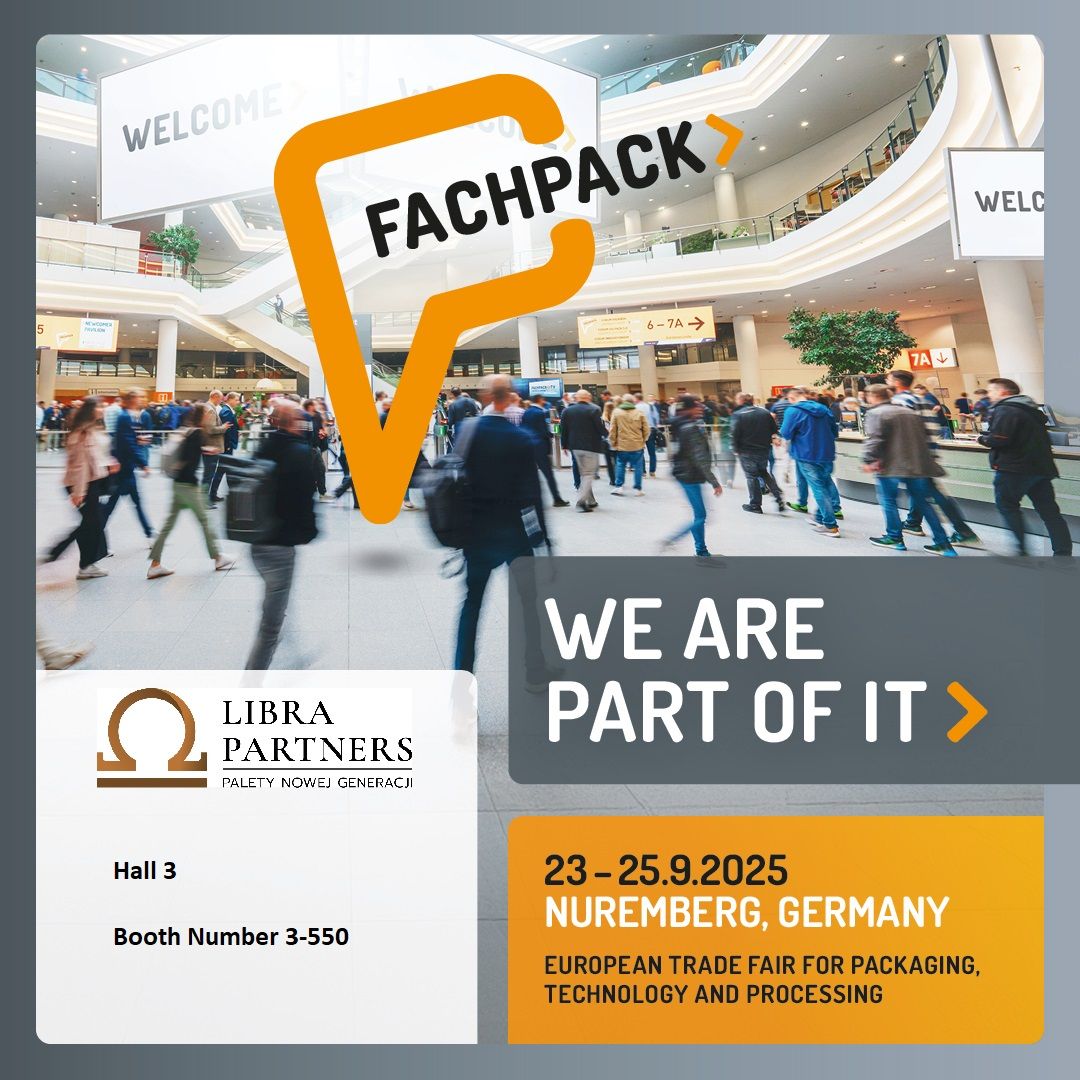
We are pleased to announce that LIBRA PARTNERS – New Generation Pallets will once again be exhibiting at the FachPack trade fair in Nuremberg!

When: 3–25 September 2025

Where: Nuremberg, Germany

Our location: Hall 3 / Booth 3-550 – that’s our stand!

We will present our latest solutions:

Pallet pooling – an innovative system that enables effective management of pallets in circulation, reducing logistics costs and environmental impact. The ideal solution for companies seeking flexibility and savings in the supply chain.

ESD pallets – a new addition to our range, designed for the electronics industry and wherever protection against electrostatic discharge is crucial.

This is a great opportunity to learn about our full range of services and discuss potential opportunities for cooperation.

Visit our stand and see how LIBRA PARTNERS can support your business: www.libra-partners.pl

#FachPack2025 #PoolingPalet #ESD #Logistyka #Innowacje #LIBRAPartners#FACHPACK#Pooling#Palety ekologiczne

Contact us

Do you need sturdy and durable pallets for transportation or storage?

LIBRA PARTNERS at IPACK-IMA 2025 in Milan

Booth D117, Hall 1
May 27–30, 2025 | Fiera Milano

We’re excited to announce that LIBRA PARTNERS will be exhibiting at IPACK-IMA 2025, one of the leading international trade fairs for processing and packaging. Come visit us and explore the future of pallet solutions!

What will we showcase? Our latest generation of innovative pallets, including:

  • ESD pallet – perfect for electronics and high-tech industries
  • Antibacterial pallet – a global innovation in microbial safety
  • Hygienic pallet with a solid deck – ideal for cleanroom and food-grade environments
  • Recycled pallet with updated LCA analysis – proving over 2x lower CO₂ emissions compared to standard wooden pallets

Don’t miss the opportunity to talk to us about sustainability, logistics optimization, and breakthrough materials.

Want to schedule a meeting during the fair? Contact us via www.libra-partners.pl #IPACKIMA2025 #LibraPartners #Innovation #Sustainability #ESD #HygienicDesign #Antibacterial #PackagingSolutions #NextGenPallets #CircularEconomy

Education + ecology + innovation = the future of logistics!

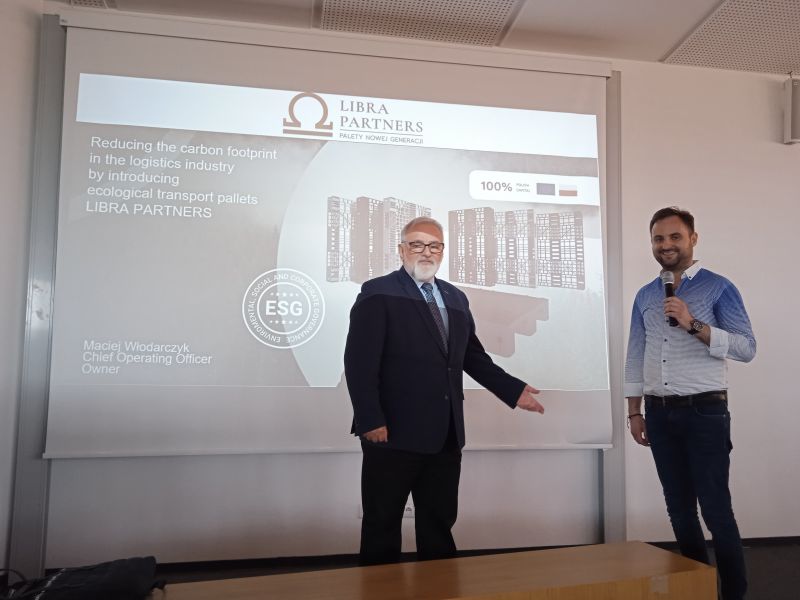
Just before the May break, I had the pleasure of delivering a guest lecture at the Mazovian Academy (MANS) in Warsaw, invited by Prof. Zygmunt Domański. The audience consisted of international students of logistics.

Topic: “Reducing the carbon footprint in the logistics industry by introducing ecological transport pallets – LIBRA PARTNERS”

During the session, I covered:

  1. The role of recycled plastic pallets in reducing CO₂ emissions,
  2. The example of our antibacterial pallet MW01-MED,
  3. Implementation of Circular Economy in our business model,
  4. Carbon footprint comparison: plastic vs. traditional wooden pallets
  5. Process optimization and ISO 9001 certification in production.

Thanks to the students for their engagement and to MANS for the opportunity to promote sustainable innovation in logistics!

#sustainability #logistics #circularEconomy #CO2reduction #plasticpallets #LIBRAPARTNERS #guestlecture #ESG #innovation #MANSWarsaw #MaciejWlodarczykLIBRA #ISO9001LIBRA LIBRA PARTNERS – Palety Nowej Generacji