💸 The TCO Paradox: Why is a wooden pallet costing 52 zł more expensive than a recycled pallet costing 79 zł? [Financial and Operational Analysis]

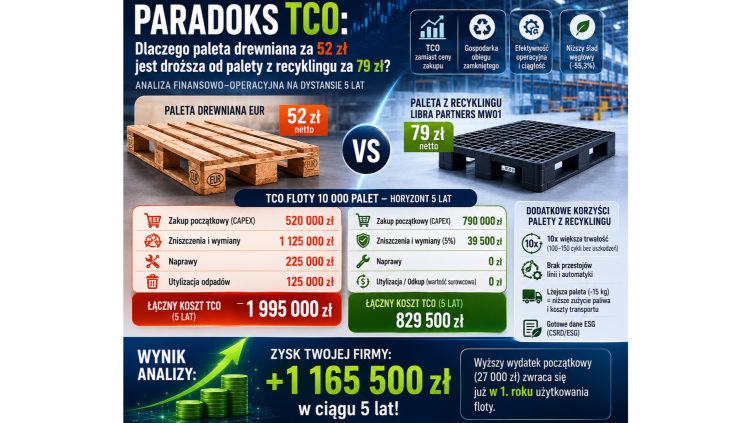
Most tendering processes in procurement and logistics departments are based on a simple yet misleading metric: the unit purchase price (CAPEX). Viewed through this lens, the choice seems obvious. A standard new EUR-type wooden pallet currently costs around PLN 52 net on the market. In contrast, the price of a recycled plastic pallet from Libra Partners is PLN 79 net.

The difference in favour of wood amounts to PLN 27 per unit (approx. 52%). For a fleet of 10,000 vehicles, this translates to an apparent saving of around PLN 270,000 up front.

This is a classic purchasing trap. As operations managers, we must stop evaluating logistics carriers solely on the basis of the purchase invoice and start analysing them in terms of Total Cost of Ownership (TCO), i.e. the total cost of ownership over the product’s entire lifecycle.

The financial and technical analysis below demonstrates why ‘cheaper’ timber results in huge operating losses, whilst an investment in recycled plastic more than pays for itself.

🔍 The hidden costs of timber (The tip of the iceberg in the logistics budget)

When purchasing a wooden pallet for PLN 52, the Purchasing Director accepts a number of risks and secondary costs that do not appear on the first-day spreadsheet but impact the operating budget (OPEX) over the following months:

  1. Rotational loss: On average, a wooden pallet in heavy industrial use can withstand only 5 to 8 cycles without sustaining damage. After this period, it requires repair or complete replacement.
  2. Repair costs (Maintenance): The average cost of replacing damaged boards or supports on a single wooden pallet is around PLN 15–20 (labour + materials).
  3. Paid waste disposal (Waste Management): A damaged wooden pallet that cannot be repaired is, in legal terms, classified as industrial waste. The cost of disposing of a tonne of wood waste has risen dramatically. The company is effectively paying to dispose of a pallet that it had previously purchased.
  4. Warehouse automation downtime: Modern high-bay warehouses and automated storage and retrieval systems (AS/RS) rely on photoelectric sensors and load cells. Warped skids, broken pieces of wood or protruding nails block the lines and halt operations. The cost of one minute of downtime on a modern production or distribution line ranges from several hundred to several thousand zlotys.

📊 TCO Maths: 5-year financial modelling

To illustrate the difference, let’s run a financial simulation for a closed-loop warehousing and distribution system (internal pooling or a dedicated closed-loop system) for a fleet of 10,000 pallets over a five-year period.

Let’s make a conservative operational assumption: on average, a pallet completes 15 cycles (rotations) per year. Over a five-year period, this amounts to a total of 75 cycles.

Scenario A: A fleet of 10,000 EUR wooden pallets (Price: 52 PLN)

  • Initial purchase (CAPEX): 10,000 pallets × PLN 52 = PLN 520,000
  • Costs of damage and replacement (Physical depreciation): A wooden pallet rarely lasts for 75 cycles. Assuming an average annual loss/total damage rate of 25%, the company must purchase a total of 125% of its original fleet (12,500 new pallets) over a five-year period:
  • Costs of ongoing repairs: Let’s assume that the remaining pallets require, on average, one major repair per year (cost: 15 zł). Over a 5-year period, this amounts to:
  • Waste disposal costs: Disposal of 12,500 damaged pallets (weighing approx. 24 kg each, amounting to 300 tonnes of waste) at a disposal cost of PLN 250 per tonne:
  • TOTAL COST OF THE WOODEN FLEET (5 YEARS): PLN 1,995,000

Option B: A fleet of 10,000 recycled plastic pallets from Libra Partners (Price: PLN 79)

The lifespan of a plastic pallet made from HDPE regranulate (e.g. our MW01 model) in a closed-loop system is estimated at a minimum of 10–12 years (it can withstand up to 10 times more cycles than wood). It can easily withstand 100–150 rotations without any mechanical damage.

  • Initial purchase (CAPEX): 10,000 pallets × PLN 79 = PLN 790,000
  • Costs of damage and replacement: The rHDPE structure is monolithic, with no nails or moving parts. The damage rate in closed loops is less than 1% per year (losses). Over a 5-year period, the reorder rate is 5% of the fleet (500 units):
  • Repair costs: PLN 0 (the plastic does not crack in a cascade-like manner and does not require carpentry work).
  • Waste disposal costs: PLN 0. What’s more, even after years of use, a pallet retains its raw material value. At Libra Partners, we guarantee to buy back used pallets, which generates additional revenue (residual value) rather than disposal costs.
  • TOTAL COST OF THE PLASTIC FLEET (5 YEARS): PLN 829,500

📉 Financial summary (ROI)

💥 Analysis results: By choosing a recycled pallet for PLN 79 instead of a wooden one for PLN 52, your company avoids spending PLN 1,165,500 over 5 years on hidden operating costs. The higher initial outlay (by PLN 270,000) pays for itself with interest within just a few months of using the fleet.

⚙️ Impact on the transport phase: Hidden weight bonus

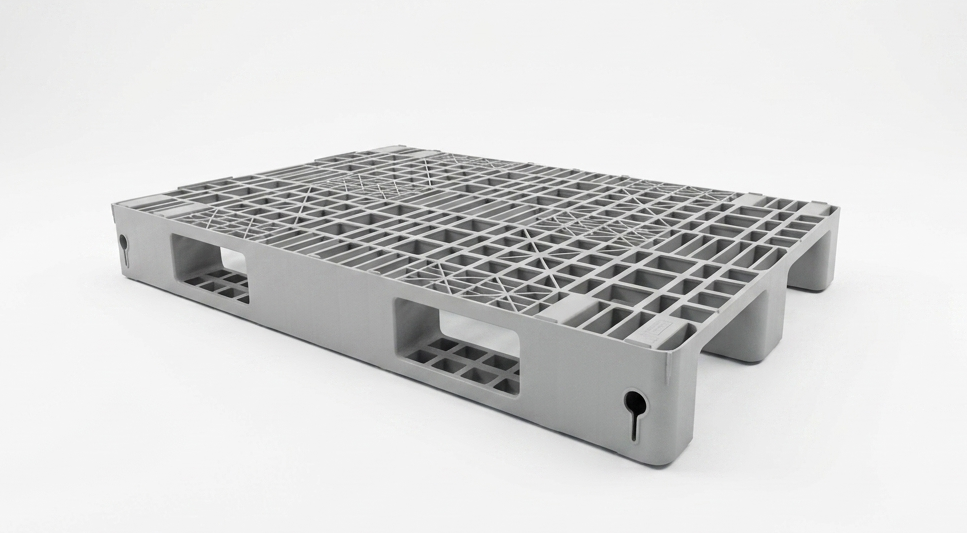
In addition to the purely cost-based analysis, there is also the transport engineering aspect to consider. A standard EUR pallet weighs around 24 kg. The Libra Partners MW01 plastic pallet weighs just 9 kg (while maintaining a certified static load capacity of up to 3,000 kg).

Replacing 10,000 wooden pallets with plastic reduces the physical weight of warehouse stock by 150 tonnes. With full truckload (FTL) shipments, this allows for a reduction in the transport’s tare weight of several hundred kilograms per journey, translating directly into lower fuel consumption (diesel/EV) and real freight savings.

🎯 A proposal for the CPO and CFO

If your procurement department continues to report ‘savings’ of 27 zł per unit by opting for wooden pallets, it is in fact approving a drain on the operating budget amounting to millions of zlotys.

A recycled pallet for 79 zł is not an expense. It is a stable, predictable asset that optimises the Total Cost of Ownership (TCO), ensures the continuity of warehouse automation operations, and provides ready-to-use emissions data for the CSRD report (a 55.3% reduction in the material’s carbon footprint).

Please feel free to contact me via private message – together with the Libra Partners team, we will carry out a dedicated TCO audit of your company’s logistics processes.

#LibraPartners #TotalCostOfOwnership #TCO #Logistics #Procurement #CFO #SupplyChain #CostOptimisation #Automation #CircularEconomy #FinancialAnalysis

Scope 3 in corporations: Why are the millions spent on decarbonising the supply chain failing to deliver results? [TCO Report and Analysis] 📊📉

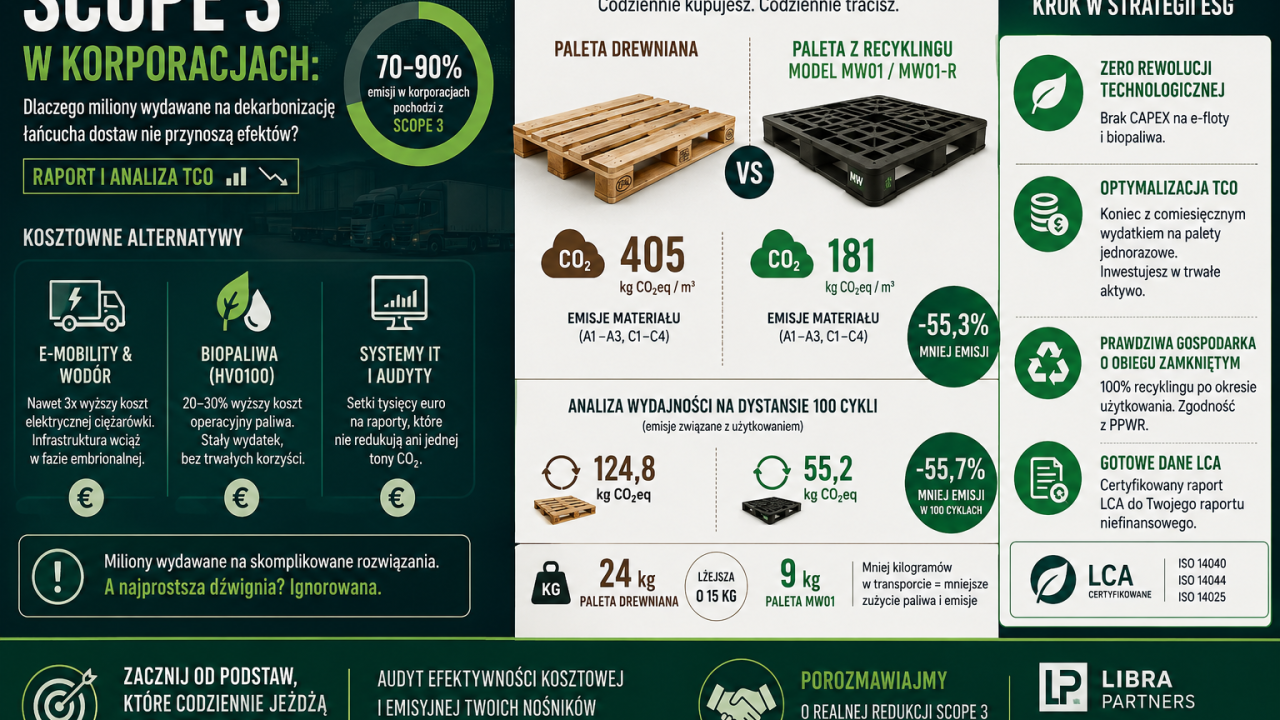
For most large enterprises and corporations, the implementation of the CSRD has become a moment of truth. The greatest challenge has proved to be reporting and reducing emissions in the Scope 3 (value chain) area, which can account for over 70% and up to 90% of an organisation’s total carbon footprint.

In their quest to reduce emissions, companies are currently investing heavily in complex and extremely costly projects. Are they right to do so? Let’s take a look at the alternatives for Scope 3 decarbonisation that the market is currently pushing, and compare them with the simplest operational lever, which has been overlooked until now.

💰 Costly alternatives: How much does corporate decarbonisation cost?

Most Scope 3 reduction strategies are based on three highly capital-intensive areas:

  1. Modernisation of subcontractors’ fleets (E-mobility & Hydrogen): Companies are urging logistics operators to replace their fleets with electric or hydrogen-powered lorries.
  2. Requirement to use biofuels (HVO100): Some companies are opting to subsidise transport that uses alternative fuels, such as HVO (Hydrotreated Vegetable Oil).
  3. Audits and IT systems for supplier mapping: Spending hundreds of thousands of euros on software platforms designed to track the carbon footprint of every single component across hundreds of subcontractors.

Conclusion? Companies are investing millions in methods that are complex, expensive and often ineffective at the current stage of technological development. Meanwhile, they are overlooking the element that physically holds each of these supply chains together: the load carrier.

🪵 A shopping blind spot: The wooden pallet paradox

Let’s take a look at the procurement structure of most large manufacturing and distribution companies. Due to wear and tear, breakages and losses, these companies purchase new wooden pallets every month – in huge quantities running into the thousands.

From an accounting and environmental perspective, this is a massive, recurring waste. In logistics, wood is treated almost as a disposable product. Worse still, the widespread belief that this natural resource is carbon-neutral is a myth. A full LCA (Life Cycle Assessment) proves something quite different.

📉 Hard data from the LCA report for the MW01 / MW01-R model

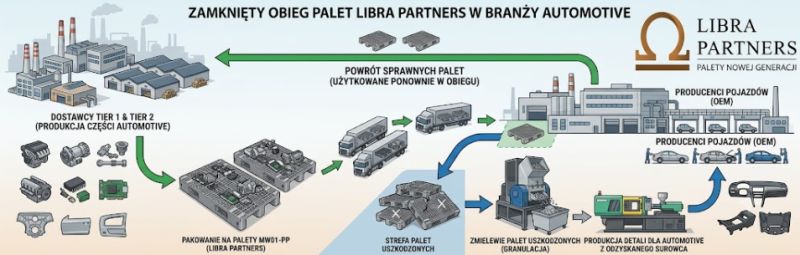
Commissioned by Libra Partners, the Envirly platform carried out a certified product environmental footprint assessment (in accordance with the rigorous standards ISO 14040, ISO 14044 and ISO 14025). The results clearly demonstrate why rotational timber procurement undermines ESG indicators:

  • Carbon footprint of the material (per m³): The production and disposal of a standard wooden pallet generates 405 kg CO₂eq. By comparison, our recycled pallet (Model MW01) generates just 181 kg CO₂eq. That’s a direct reduction in emissions of 55.3%!
  • Performance analysis over 100 cycles: The lifespan of a plastic pallet made from HDPE regranulate is estimated at a minimum of 10 years (it is up to 10 times more durable than wood). Over 100 logistics cycles, emissions associated with the use of the MW01 pallet amount to just 55.2 kg CO₂eq, whilst the continuous purchase, repair and rotation of wooden pallets generates as much as 124.8 kg CO₂eq.

An additional advantage affecting the transport phase (A4) is the pallet’s own weight. The technical data sheet (TDS) for the MW01 model indicates a weight of just 9 kg (while maintaining a static load capacity of up to 3,000 kg and a racking load capacity of 750 kg, as certified to ISO 8611). A standard wooden pallet weighs approx. 24 kg. Replacing wood with plastic from Libra Partners allows each shipment to be lightened by hundreds of kilograms, directly reducing truck fuel consumption.

🎯 The simplest and most cost-effective step in your ESG strategy for next year

If your team is currently drawing up the budget and sustainability targets for the next financial year, switching your pallet fleet from wooden to closed-loop plastic (internal pooling or dedicated external pooling) should be a low-hanging-fruit priority.

Why?

  1. No capital expenditure required for the technological revolution: You don’t need to buy electric lorries or pay extra for expensive biofuels. You simply switch the fuel within your existing processes.
  2. Optimising TCO (Total Cost of Ownership): You’ll stop blowing your budget every month on thousands of new wooden pallets, which immediately lose value and get damaged in your warehouses. Instead, you’ll invest in a durable asset (HDPE), which we’ll buy back from you in full after years of use and recycle.
  3. A true circular economy: You not only meet emission reduction targets, but also comply with the upcoming requirements of the PPWR Regulation regarding the design of packaging for recycling and reuse.

Our LCA certificate is a ready-to-use audit document. You don’t need to estimate emissions ‘by eye’ or hire more consultants. We provide precise emissions data that your ESG team can simply copy and paste into your non-financial report as hard, documented evidence of Scope 3 reductions.

Instead of looking for complicated and expensive solutions, let’s start with the basics – the vehicles that drive around your warehouse every day. Let’s discuss an audit of the cost and emissions efficiency of your logistics vehicles.

#ESG #Scope3 #CSRD #Logistics #SustainableDevelopment #CircularEconomy #LibraPartners #CarbonFootprint #ESGReporting #CostOptimisation #PPWR #LCA

Pallets for automated storage and retrieval systems (AS/RS)

A pallet in an automated warehouse has just one key task: never to bring the line to a halt. Any deviation in dimensions, weight or rigidity—even by a single millimetre—will sooner or later trigger a system alarm, cause the stacker crane to stop and result in costly machine maintenance.

What is an automated storage and retrieval system (AS/RS)?

Automated storage and retrieval systems (AS/RS) are state-of-the-art logistics environments in which autonomous stacker cranes, shuttle systems or miniload systems – controlled directly via warehouse management systems (WMS) and PLCs – are responsible for the transport, storage and retrieval of goods.

For these systems, the pallet serves as the direct ‘mechanical-logistical interface’. It must therefore have absolutely reproducible dimensions, a constant weight and unchanging structural rigidity, as the entire automated system operates with tolerances in the millimetre range. Unlike a traditional high-bay warehouse, which is operated by forklift drivers, there is no room for even the slightest deviation from the norm in AS/RS systems. A single warped board, a broken skid or a protruding nail can block the forks of the stacker crane or the optical sensor, thereby paralysing the operation of the entire distribution centre.

What is the most important factor when it comes to pallets for automation?

We can identify five key features that a transport vehicle must have in warehouse automation:

1. Absolute dimensional repeatability

In automated warehouses, it is essential that every pallet has identical dimensions (the Euro standard: 1200 × 800 × 144 mm). Stacker cranes and shuttle trolleys are designed for a fixed format. Plastic pallets, produced using injection moulding, guarantee identical dimensions for each unit, eliminating sensor reading errors and the risk of collisions.

2. No nails, splinters or loose parts

Protruding nails or splinters of wood are the most common cause of mechanical damage to roller and belt conveyors. What is more, small splinters and wood dust contaminate photoelectric cells and safety sensors. Control systems interpret them as obstacles on the route, which generates false alarms and forces a manual restart of the line. A plastic pallet is completely uniform and free of metal components.

3. High structural rigidity

A pallet designed for automated handling must not bend or twist under the weight of the cargo – particularly when stored on cantilever racks. Excessive deflection shifts the load’s centre of gravity, which means that advanced vision systems and automated grippers may incorrectly identify the pallet’s position, rejecting it to the error station.

4. Clean, uniform and stable runners

Any defects in the runners, unevenness or damp patches on wooden pallets cause slippage, increase rolling resistance on the rollers and result in uneven loading of the electric drives. The smooth, consistent surface of the plastic pallet’s runners ensures smooth movement and stable operation of the entire transport system.

5. Controlled and consistent kerb weight

The algorithms that control warehouse automation are based on precise calculations of the permissible weight: load weight + pallet weight. The weight of traditional wooden pallets can vary by as much as several kilograms, depending on their moisture content. Plastic pallets have a constant tare weight, which facilitates the calibration of system scales and overload protection mechanisms.

Shelf load capacity certified to ISO 8611

In AS/RS warehouses, the key parameter is the racking load capacity, i.e. the ability of the load-bearing structure to rest safely on the crossbeams under maximum load without exceeding the permissible deflection.

When selecting a medium for automation, one must not rely solely on marketing claims. It is essential to have certified parameters obtained from laboratory tests conducted in accordance with the international standard ISO 8611. Only objective destructive and load tests in accordance with ISO 8611 guarantee that a pallet placed in an automated racking system will maintain the required rigidity and will not cause a system failure.

Wood vs plastic in AS/RS warehouses – A summary of the differences

  • Wooden pallets: They are characterised by significant dimensional variation between batches, susceptibility to moisture (variable weight), the presence of nails and splinters, and cracked boards and defects in the runners pose a high risk of operational failure.
  • Plastic pallets: They guarantee 100% dimensional consistency straight from the mould, a constant weight regardless of weather conditions, the complete absence of metal parts and sharp edges, and perfectly smooth runners that work seamlessly with automated systems.

Any flaw in a wooden pallet could potentially bring logistics operations to a standstill, whereas a plastic pallet eliminates these risks right from the warehouse design stage.

Libra Partners’ dedicated automation pallets

Our plastic pallets in the standard Euro size (1200 × 800 × 144 mm) have been specifically designed to meet the stringent requirements of AS/RS systems. Their geometry and high racking load-bearing capacity (confirmed by tests in accordance with ISO 8611) ensure they work perfectly with stacker cranes, shuttle trolleys and conveyor systems. All pallets in this series are identical from the perspective of optical sensors and laser pallet profile scanners.

The introduction of plastic pallets from Libra Partners eliminates breakdowns caused by wood contaminating the line, reduces the number of false detections and minimises the need for maintenance intervention. As a result, the overall equipment effectiveness (OEE) of the entire AS/RS system increases significantly.

FAQ – Frequently Asked Questions

Is every Euro pallet suitable for AS/RS warehouses?

Definitely not. Warehouse automation requires pallets with very tight dimensional tolerances, excellent rack stability and flawless skid quality. A standard, randomly selected wooden Euro pallet very often fails to meet these criteria and is rejected by the so-called contour inspection stations (inbound scanners).

Why do inspection stations so often reject wooden pallets?

As a natural material, wood is constantly changing – it swells when exposed to moisture, shrinks or warps during use. For the sensors and measuring lasers in the automated warehouse, these changes mean that permissible limits are exceeded, resulting in the pallet being automatically stopped and removed from the line.

Won’t a plastic pallet be too slippery for the machine’s metal rollers?

No. The design of plastic pallets intended for AS/RS systems takes this into account. The skids of the carriers feature a specially designed material structure and optional rubber anti-slip elements. This ensures an optimal coefficient of friction and guarantees safe, stable movement on the rollers, as well as preventing slippage during sudden braking of the stacker cranes.

How can I be sure that the plastic pallet I’ve chosen will meet the requirements of my system?

The pallet specifications (dimensional tolerances, weight, deflection and load-bearing capacity, as confirmed by ISO 8611) must be consulted and verified with the AS/RS system integrator (technology supplier). Compliance with the integrator’s guidelines is also essential for maintaining the full warranty on the automated equipment.

Does switching from wooden pallets to plastic ones require any changes to the software or hardware?

In most cases, this does not require any mechanical or programming changes. All that is needed is to enter the pallet’s fixed geometric parameters into the WMS system and carry out tests on the production line. Thanks to their perfect dimensional and weight consistency, plastic pallets make it much easier to calibrate the entire system.

Summary: Are you implementing or designing a state-of-the-art automated warehouse and want to eliminate the risk of costly downtime and losing your integrator’s warranty? Contact the experts at Libra Partners. We will help you select the optimal plastic pallet model and deliver a free trial batch directly to your production line.

The Packaging and Packaging Waste Regulation (PPWR) explicitly promotes a closed-loop model for packaging. Plastic pallets from Libra Partners – made from pure recycled HDPE, lightweight, highly durable and 100% recyclable – are the perfect solution to the upcoming, stringent EU legal requirements.

What is PPWR and who does it apply to?

The PPWR is a new European Union regulation on packaging and packaging waste, which completely replaces the existing, outdated Directive 94/62/EC. Unlike the directive, the PPWR Regulation applies directly in all EU Member States, without the need for transposition into national law. The provisions have already entered into force, and the vast majority of the stringent requirements will become mandatory from 12 August 2026.

The regulation covers all types of packaging without exception: primary, secondary and transport packaging. Under the regulations, pallets are classified as transport packaging. This means that manufacturers, importers, distributors and, above all, users of pallets in supply chains will be legally required to demonstrate full compliance with the PPWR, which will also affect the level of fees under Extended Producer Responsibility (EPR) schemes.

What are the objectives of the PPWR? Recycled material, recyclability and reuse

PPWR is radically changing the game in logistics, based on three main pillars:

  • Maximising the use of reusable packaging (Reuse): The European Union is setting specific minimum percentage targets for the use of reusable pallets in closed-loop systems from 2030 onwards. These regulations are intended to challenge the single-use packaging model.
  • Mandatory recycled content: A gradual increase in the required proportion of recycled materials in new plastic packaging.
  • Design for Recycling: From 2030, all packaging on the EU market must be 100% suitable for material recycling.

Furthermore, the PPWR places great emphasis on eliminating so-called ‘empty space’ and reducing the weight of packaging (which must be as light as possible whilst retaining its protective functions). New, stringent limits on hazardous substances, including heavy metals and PFAS compounds, are also of paramount importance. This forces companies to exercise full control over the chemical composition of the substrates they use.

Timetable and declaration of conformity: Key dates

  • 11 February 2025 The official entry into force of the regulations.
  • 12 August 2026 – The start of the strict enforcement of most of the regulations. From this date, companies must have full compliance documentation, adhere to the new limits on hazardous substances, and meet the recyclability criteria.

What does this mean for procurement and logistics? What does this mean for procurement and logistics? Manufacturers and importers of packaging will be legally required to issue official PPWR declarations of conformity. As a recipient of pallets, you must require your supplier to provide detailed product data sheets and laboratory certificates confirming the recycled content, material composition and the absence of prohibited substances.

Do Libra Partners’ HDPE pallets comply with the PPWR requirements?

Libra Partners offers standardised Euro plastic pallets (measuring 1200 × 800 × 144 mm) manufactured from high-quality, pure HDPE regranulate. These pallets are fully certified to international standards (the standard model weighs approx. 9 kg and can withstand a static load of up to 3,000 kg, a dynamic load of up to 1,500 kg and a racking load of up to 750 kg).

From the perspective of the PPWR regulations, these pallets offer key legal advantages:

  • From the perspective of the PPWR regulations, these pallets offer key legal advantages: Compliance with the recycled content requirement: Being made from recycled HDPE fulfils the EU requirement to use recycled materials in plastic packaging.
  • Exceptional durability (Reuse-compatible): Our pallets can be safely used in closed-loop logistics systems (internal and external pooling) for many times longer than traditional wooden pallets, thereby perfectly meeting the EU’s waste reduction targets.
  • Complete purity of composition: The production process at Libra Partners ensures that the material is free from hazardous substances (PFAS, heavy metals), as confirmed by comprehensive technical documentation.

What does PPWR mean for logistics managers and buyers?

The choice of load carrier is no longer merely a matter of cost optimisation – it has become a decision concerning regulatory compliance and legal risk management. The use of standardised recycled plastic pallets (HDPE) significantly simplifies reporting within national EPR schemes and facilitates audits as part of a company’s ESG strategy, providing ready-made, hard data on the weight, material and origin of the packaging.

By choosing Libra Partners’ solutions, you can be sure that your supply chain will be 100% compliant with EU law after 12 August 2026.

FAQ – Frequently Asked Questions

Does the PPWR cover pallets as transport packaging?

Yes. The PPWR Regulation explicitly lists pallets as transport packaging subject to the full scope of the regulations – including extended producer responsibility and reporting obligations.

From when must a company have pallets that comply with the PPWR?

Most of the key provisions, including the requirement for a declaration of conformity and restrictions on chemical composition and hazardous substances (such as PFAS), will come into force on 12 August 2026.

How can compliance of plastic pallets with the new legislation be documented? Is ISO 8611 required?

Under the provisions of the PPWR, the manufacturer (or importer) is required to provide an official declaration of conformity and a technical data sheet (TDS) specifying the type of raw material used, its weight and the recycled content. The international standard ISO 8611, on the other hand, is a separate engineering standard under which the strength and load-bearing parameters of the pallet (static, dynamic, racking) must be laboratory-tested and verified so that the data declared in the technical data sheet is fully reliable for auditors.

Are HDPE plastic pallets better than wooden pallets in terms of PPWR?

Yes, from the perspective of reporting and circular economy objectives, recycled HDPE offers a significant advantage. It allows for the precise, repeatable determination of the percentage of recycled content in each item and guarantees full, loss-free material recyclability at the end of the product’s life. In the case of traditional, contaminated or repeatedly repaired wooden pallets, it can be extremely difficult to accurately demonstrate these parameters in environmental reports.

How do Libra Partners’ pallets support the achievement of ESG goals?

Thanks to their exceptionally long service life and use within closed-loop logistics systems, Libra Partners’ plastic pallets drastically reduce a company’s packaging waste stream. The use of 100% recycled raw materials and the reduction in CO2 emissions (confirmed by LCA certification) provide hard, measurable data for annual sustainability reports.

Summary: The new EU PPWR regulation means that, from August 2026 onwards, the lack of proper transport packaging documentation will bring many logistics chains to a standstill. If you want to ensure your business is prepared for the upcoming changes, contact the experts at Libra Partners. We will help you select the right pallet model, provide free samples for testing, and prepare full technical documentation compliant with the PPWR.

The EUDR does not cover plastic pallets; therefore, for buyers and logistics managers, they are the simplest way to avoid the new, stringent due diligence obligations and the legal risks associated with the origin of timber.

What is the EUDR and what is its purpose?

The EUDR is European Union Regulation 2023/1115 on goods and products associated with deforestation and forest degradation. In practice, these regulations are intended to drastically restrict the import and placing on the European market of timber products (and other raw materials, such as rubber, soya or cocoa) if the supplier is unable to unequivocally demonstrate that they originate from legal, ‘deforestation-free’ sources.

Of course, the new EU legislation does not completely block the timber trade – but it does require the entire supply chain to be fully documented. For companies that manufacture, import or place timber products on the EU market for the first time (including manufacturers of wooden pallets), this means significant new administrative procedures, increased operating costs and the risk of financial penalties.

Which pallets does the EUDR cover? Who is responsible, and what are their obligations?

The EUDR covers, among other things, wooden packaging in all forms, including new wooden pallets placed on the EU market.

The key term here is ‘placing on the market’. Crucial responsibilities rest with manufacturers, importers and first sellers. These companies must:

  • Implement and rigorously apply due diligence procedures.
  • Keep detailed records confirming that the raw material has been sourced legally.
  • Obtain accurate geolocation data (GPS coordinates) for the plots of land from which the timber used to manufacture a given batch of pallets was sourced.

For end users of pallets and logistics operators, this means that packaging suppliers must be thoroughly vetted. If your wooden pallet supplier fails to comply with the formalities, you risk having your deliveries held up or facing penalties.

Timeline: When did the EUDR come into force?

In accordance with the latest decisions by the EU authorities, the timetable for the implementation of the EUDR provisions is as follows:

  • From 30 December 2026, the regulations will apply to large and medium-sized enterprises.
  • From 30 June 2027, the requirements will apply to micro and small enterprises.

Although these dates may seem a long way off, the years 2026–2027 will be a period of significant upheaval for the wooden pallet market. Timber suppliers and packaging manufacturers must completely overhaul their IT systems and compliance procedures. For the end customer purchasing wooden pallets, this means one thing: the risk of sudden price volatility, periodic shortages in the availability of pallets, and a significant amount of extra work verifying suppliers’ documents.

Why are plastic pallets completely outside the scope of the EUDR?

Plastic pallets, including the flagship recycled HDPE models manufactured by Libra Partners, are not timber products. As such, they are in no way subject to the EUDR.

When choosing plastic containers:

  • You are under no obligation to carry out due diligence procedures within the meaning of the EUDR.
  • You do not need to ask the supplier for the geographical coordinates of the forests or certificates of origin for the raw material.
  • The prices of plastic pallets are completely immune to the regulatory upheavals that will affect the timber market.

From the perspective of a purchasing manager or logistics manager, switching to plastic pallets represents a significant reduction in regulatory risk and the red tape that the compliance department would otherwise have to deal with.

An alternative ready to meet the challenges of PPWR and EUDR

For companies involved in large-scale logistics, the EUDR imposes a significant legal liability for every tonne of new timber. HDPE plastic pallets are completely unaffected by these regulations.

What’s more, by investing in reusable plastic pallets from Libra Partners, you’ll kill two birds with one stone: you’ll eliminate EUDR risks whilst also fully complying with the upcoming EU requirements on packaging waste reduction (the PPWR Regulation).

FAQ – Frequently Asked Questions

I’ve heard that EPAL lobbyists have negotiated an exemption for pallets from the EUDR. Is that true?

No, that’s a myth. Organisations representing wooden pallet manufacturers (including the EPAL committees and the European federation FEFPEB) lobbied very hard in Brussels, but they did not succeed in securing an exemption for new wooden pallets from the EUDR. All newly manufactured wooden pallets (both domestic and imported) are 100% subject to the regulation. The only success achieved by the lobbyists was a clarification of the regulations concerning used pallets (in the secondary market), meaning that logistics companies do not have to report GPS coordinates every time goods are transported on an old pallet. The market for the purchase of new wooden pallets remains fully subject to the bureaucracy of the EUDR.

Why is buying new wooden pallets in Ukraine now such a risky business?

Under EU law, Ukraine is treated as a ‘third country’. This means that any Polish company importing new pallets from there is, under the regulations, the importer responsible for the EUDR. It is the Polish buyer who must obtain accurate geolocation data (GPS) for the Ukrainian forests from which the raw material was sourced. Given the geopolitical situation, the difficulty of conducting on-site audits and the risk of corruption associated with illegal logging, reliably verifying this data is virtually impossible. If an EU inspection reveals discrepancies in the documentation of a Ukrainian sawmill, the Polish importer will face huge financial penalties and the goods will be seized.

Does the EUDR apply to users of pallets in day-to-day logistics?

As a general rule, the regulation applies to entities placing timber products on the market for the first time. Ordinary secondary trade and the reuse of older pallets on the domestic market do not give rise to any new reporting obligations. However, be mindful of importing goods: if your company imports finished goods from outside the EU (e.g. from Asia) on wooden pallets, you become, in the eyes of the law, the importer of that wooden packaging, and it is your responsibility to demonstrate its full compliance with the EUDR and to obtain the forest’s GPS coordinates. Choosing plastic pallets for international transport completely eliminates this risk.

Are all new wooden pallets subject to the EUDR?

Yes. If the pallet enters the European Union market as a new timber product (CN code 4415), its manufacturer or importer must, without exception, carry out due diligence procedures and register the pallet in the EU system.

What documents must a supplier of wooden pallets have?

Such a supplier must have a complete due diligence audit trail, an official declaration of due diligence submitted to the EU system, documentation proving that the raw material was sourced from a legal source, and precise geolocation data (GPS) for the forest plots from which the timber used to produce the batch of pallets in question was harvested.

Does choosing plastic pallets exempt you from EUDR obligations?

Yes. Plastic pallets do not contain a single gram of wood-based material (they are classified under a completely different customs code – CN 3923), and are therefore entirely excluded from this regulation. The buyer does not assume any legal or administrative risk associated with deforestation.

From an ESG perspective, isn’t plastic worse than wood?

From an ESG perspective, isn’t plastic worse than wood? Absolutely not. A modern approach to ESG involves not only analysing the material itself, but also regulatory stability and supply chain transparency. Libra Partners’ plastic pallets are made from 100% recycled material, operate in closed-loop systems for many years, hold an official LCA certificate confirming a 55% reduction in carbon footprint, and completely eliminate the risk of deforestation (EUDR).

Summary: Between 2026 and 2027, price will no longer be the sole criterion for selecting pallets – legal certainty and a lack of red tape will take its place. If you wish to protect your logistics operations from the effects of the EU Deforestation Regulation and the risks associated with importing pallets from abroad, please contact the Libra Partners team. We will provide free samples of recycled plastic pallets for testing in your warehouse.

Specifications and dimensions of Euro pallets

Euro pallets, also known as EPAL pallets, are standard pallets that have been widely used in Europe for many years. They are among the most commonly used pallets for the transport and storage of goods. What sets Euro pallets apart are their standard dimensions, which are specified in the European standard UNE-EN 13698-1.

Would you like to find out what the dimensions of a Euro pallet are, how much they weigh, and what their key features are? If so, read on!


Standard Euro pallet dimensions

What are the dimensions of a Euro pallet? According to the standards, Euro pallets must measure 1200 x 800 mm. It is precisely these standardised dimensions of 1200 x 800 mm that make Euro pallets the most popular type of pallet in Europe. The height of a Euro pallet is 144 mm.


Weight of a Euro pallet

A standard Euro pallet weighs around 25 kg if it is made of wood. However, it is worth noting that plastic pallets are also available on the market today. Such pallets, measuring 1200 × 800 mm, weigh less – as little as around 9 kg.


Load capacity and dimensions of a Euro pallet

The standard dimensions of a pallet are 1200 x 800 x 144 mm. This size gives it a load capacity of between 1000 and 1500 kg, depending on how the load is distributed. The static load capacity, however, is 4000 kg when the load is stored without being moved.


The surface area of a Euro pallet

Euro pallets measure 1200 x 800 mm, which, when multiplied, gives us 0.96 m². Therefore, the surface area of a Euro pallet is 0.96 m².


What are the dimensions of a Euro pallet? The history of EPAL Euro pallets

We owe the standard dimensions of the Euro pallet to the European Pallet Association, which was founded in 1991. Although the dimensions of the standard pallet have remained unchanged since the 1950s, it was only the standardisation body that ensured that only pallets of specific dimensions could bear the EPAL mark.


Why are the dimensions of a standard pallet always the same?

The Euro pallet was designed to meet the need for standardised pallet sizes. Using this type of pallet makes it much easier to retrieve stored pallets, as well as to store and transport them. The standard dimensions of a Euro pallet are also compatible with most warehouse racking systems.


Euro pallets and industrial pallets

The dimensions of a standard Euro pallet and an industrial pallet are standardised, meaning they are always the same. However, when people refer to the ‘dimensions of a standard pallet’, they are referring to a Euro pallet, which is smaller than an industrial pallet. For this reason, a Euro pallet can withstand a dynamic load of up to 1,000 kg, whereas an industrial pallet can withstand up to 2,000 kg.


What are the dimensions of a Euro pallet?

The standard pallet dimensions are 120 x 80 x 14.4 cm, where the length and width are 120 x 80 cm and the height is 14.4 cm. These Euro pallet dimensions, combined with the sharp upper edges of the runners, make it much easier to remove stored pallets, as well as to transport and store them. Euro pallets are designed to fit most storage systems and forklift trucks.


Industrial pallet size

The dimensions of an industrial pallet are  1200 x 1000 mm or 1200 x 800 mm, with a height of 144–162 mm. There are also large pallets measuring 1200 x 1200 mm. Interestingly, metal is sometimes used in the manufacture of this type of pallet.


Dimensions of other wooden pallets

Other types of wooden pallets are also available on the market, such as GMA pallets. These are used to transport goods, mainly in the USA. Their dimensions are 1219 mm x 1016 mm (48 inches x 40 inches). It is also worth mentioning disposable pallets, which can be of any size. As they are not returnable, they are tailored to individual requirements.

Choosing the right type of pallet depends on a number of factors, including the type of goods being transported. The standardised size of the Euro pallet makes transport and storage easier.


Standard pallet sizes – what else is worth knowing?

The dimensions of a Euro pallet are set out in a European standard, so they are always the same. It does not matter whether the EUR pallet is made of wood or plastic – the dimensions of a Euro pallet are always 1200x800x144 mm. This also means that we know that a lorry with a trailer can hold 33 Euro pallets, and a shipping container can hold 4–5 Euro pallets.

Please also bear in mind that whilst the size of Euro pallets is standardised, their weight is not. Weight also affects a vehicle’s load capacity, which is why plastic pallets are increasingly being chosen for transport. Such a pallet is the same size as a Euro pallet but weighs significantly less, thereby reducing transport costs. That is why choosing the right pallet is crucial for the entire supply chain.

PZH certificate – a guarantee of hygiene, safety and quality

Plastic pallets are becoming increasingly popular, especially in the pharmaceutical and food industries, as well as in any other industry where high hygiene and safety standards are required for transported goods. One of the most important certificates confirming that plastic pallets meet strict sanitary and hygiene requirements is the PZH (National Institute of Hygiene) hygiene certificate. It is a voluntary but prestigious certificate that confirms that the product is safe for human health and the environment.

What is a PZH certificate?

The PZH certificate, or Hygiene Certificate, issued by the National Institute of Public Health PZH – National Research Institute (NIZP PZH – PIB), is a document that confirms that a given product will not adversely affect human health and the natural environment.

National Institute of Public Health – National Research Institute

The National Institute of Public Health determines which product groups can be submitted for evaluation and certification at NIZP-PZH. It divides them into three basic groups:

  • goods subject to the hygiene certification process at the Environmental Health Safety Institute;
  • goods subject to hygienic certification at the Institute of Toxicology and Health Risk Assessment;
  • goods subject to the process of applying for a health certificate at the Food Safety Authority – products intended for contact with food, but also, among others, products for children and infants, etc.

National Institute of Public Health – National Institute of Hygiene

PZH is an abbreviation for Państwowy Zakład Higieny (National Institute of Hygiene). It is the oldest public health institution in the country, established on 21 November 1918. However, the institute’s first name was different, namely Państwowy Centralny Zakład Epidemiologiczny (National Central Epidemiological Institute). After five years, the name was changed to Państwowy Zakład Higieny (National Institute of Hygiene).

Are PZH certificates mandatory?

Until recently, PZH certification was mandatory for most devices and materials used in construction, including water and air conditioning systems. However, it is now only mandatory for products that come into contact with water intended for human consumption. In other cases, it is entirely voluntary.

Products that come into contact with water intended for human consumption are assessed in accordance with the requirements of Directive 98/83/EC and the Regulation of the Minister of Health on the quality of water intended for human consumption. These regulations are designed to reduce water pollution and the harmful effects of substances introduced into the water cycle.

All legal regulations concerning hygiene certification are contained in the Act on Collective Water Supply and Collective Sewage Disposal. The only scientific institution in Poland authorised by the Minister of Health to issue certificates for materials used in water distribution systems and water treatment agents is the National Institute of Public Health – National Institute of Hygiene.

PZH certificate – why is it worth applying for?

The PZH certificate prevents products and materials that are hazardous to health and life from being put into use. Therefore, when you buy a product with this certificate, you can be sure that it complies with current safety standards.

Such certification can also distinguish a given product from its competitors. A product with PZH certification is a guarantee of quality and safety. The PZH certificate confirms that the product does not contain substances harmful to health or the environment. It is a prestigious hygiene certificate that also facilitates participation in public tenders. The PZH certificate is issued on the basis of a manufacturer’s application (the applicant must send the institution an appropriate application together with complete documentation). It is worth noting that all Libra Partners products have this certificate.

How to obtain PZH certification?

So how do you obtain a PZH certificate? PZH Hygienic Certificates are issued at the request of the recipient or manufacturer by an institution authorised to assess product quality, which is (NIZP-PZH). The application can be sent electronically to the PZH e-mail address. The price of the certificate depends, among other things, on the mode of certification (standard or express).

The certificate is sent to your home by post, but it can also be sent to your e-mail address.

How to check the PZH certificate?

The PZH certificate can be checked on the manufacturer’s website, but also in places such as advertisements or information brochures. However, the most common way to check whether a product complies with safety standards is to look at the product packaging. There will be a logo with a navy blue and white circle with the name of the institution and a tree graphic at the bottom of the mark. We display this mark next to the photo of each product.

Although the PZH certificate mainly applies to products that come into contact with water, PZH-certified plastic pallets are an excellent choice, as they are not only functional but also meet legal requirements and hygiene standards.

Everything you need to know about industrial pallets

Industrial pallets play a huge role in the supply chain and are an essential tool for transporting and storing various types of goods. Such industrial pallets are commonly used in the food and pharmaceutical industries, for example, and their importance cannot be overestimated. Today, we will tell you more about them. In this article, you will learn, among other things, about the uses of industrial pallets, their weight, dimensions and price.

Characteristics of industrial pallets

These are usually wooden or plastic pallets, which differ from traditional Euro pallets primarily in that they do not have EPAL (European Pallet Association) certification. They are often referred to as single-use or English pallets (EUR2, EPAL2). Compared to Euro pallets, industrial pallets are larger, so they also have a higher load capacity and are better suited for heavy loads. They are used in both domestic and international transport because they are adapted to the specifics of transport and storage around the world.

Industrial pallet dimensions

Industrial pallets measure 1200 x 1000 x 150 mm or 1200 x 1200 x 150 mm. As you can see, unlike traditional Euro pallets (1200×800 x 144 mm), they are available in various dimensions, which affects their weight and load capacity. However, the most common ones are 1200 x 1000.

Weight of an industrial pallet

The weight of industrial pallets ranges from 20 to 30 kilograms for wooden pallets. However, classic 1200×800 industrial pallets are also available in plastic, which reduces their weight to just 9 kilograms!

Load capacity of an industrial pallet

The load capacity of a 1200×1000 mm industrial pallet is approx. 2000-2500 kg. However, bear in mind that this depends on the size of the industrial pallet, as they may vary in terms of dimensions.

Price of industrial pallets

The dimensions and construction of a pallet have a huge impact on its cost. Prices may vary depending on the size and material of the pallet, as well as the location. Standard industrial pallets usually cost around several dozen zlotys. Those made of plastic or metal may be more expensive, while used wooden pallets may be cheaper (depending on the degree of wear and tear).

Industrial pallet vs Euro pallet – comparison

The main difference between industrial pallets and Euro pallets is their dimensions and certification. Euro pallets measure 1200 × 800 mm and have a load capacity of approximately 1500 kg, which makes them suitable for standard racks, lifts and containers. They are designed for international use, where EPAL and ISPM 15 standards (including heat treatment) must be met. Industrial pallets, on the other hand, are larger and more durable (with a load capacity of up to 2,500 kg), but do not have EPAL markings. This makes them cheaper and suitable for local transport and industries where frequent rotation of goods and replacement of packaging is required.

The use of industrial pallets

The production of industrial pallets is always tailored to their intended use. Such pallets can be used in various ways, depending on the needs and the material they are made of. The most common uses for such pallets are:

  • storage and transport systems – these pallets are used in both internal and external logistics; they enable goods to be stored on racks, streamlining warehouse management;
  • international transport – industrial pallets are used almost worldwide to transport various types of cargo (in which case they must meet the relevant requirements);
  • production and distribution processes – pallets can be used to store products and move them at various stages of production;
  • Automated logistics systems – industrial pallets can enable automation and increase transport efficiency.

Industrial pallet manufacturers offer various solutions, thanks to which they have a wide range of applications in various industries. They are often tailored to individual needs and used on a one-off basis (the recipient keeps the pallet). They are adapted to conveyor systems, thus speeding up logistics processes.

You can order all kinds of pallet solutions online with delivery – regardless of whether you need industrial or Euro pallets. You can then choose carriers that comply with the relevant standards required in your industry. However, we encourage you to choose more environmentally friendly solutions, such as innovative plastic pallets.

Euro pallet and American pallet – introduction

Euro pallets and American pallets are the two most popular load carrier systems used in warehousing and transport. The main difference between them is their dimensions: American pallets measure 1200 x 1000 mm, while Euro pallets measure 1200 x 800 mm. Both types of pallets can be made not only from wood, but also from other materials, including plastic and metal, which expands their use in various industries.

Euro and American pallets – characteristics and applications

The Euro pallet, also known as the European pallet or EPAL for short, is manufactured in accordance with the PN-EN 13698-1 standard and is the most commonly used type of pallet on the European market. Its standardised dimensions of 1200 x 800 x 144 mm fit perfectly with standard containers and storage systems in Europe. They are also marked with the EUR symbol on one side, which confirms that all standards have been met. The dynamic load capacity of a Euro pallet is 1500 kg, and the static load capacity is up to 4000 kg.

American pallets, also known as universal pallets, covered by ISO 3676, are similar in length but wider, measuring 1200 mm x 1000 mm, and are commonly used in the United States and Japan. Their larger surface area translates into better stability, which is conducive to the transport of liquids. American pallets enable trade around the world.

American pallet – dimensions and nomenclature

Universal pallets, known as American pallets, are 200 mm larger than Euro pallets. Their dimensions are 1200 x 1000 mm, while Euro pallets measure 800 x 1200 mm. EN is responsible for standardising Euro pallets, while American pallets are standardised by the International Organisation for Standardisation (ISO).

Standardised dimensions mean that pallets are used for storing and transporting loads all over the world. They can be transported using any type of trolley or material handling equipment and stored in any storage system.

The primary load carrier in Europe – characteristics of Euro pallets

Although American pallets are quite commonly used in Poland, they cannot compare to Euro pallets. They are the basic logistics solution throughout Europe, so they work best for local goods. With their help, you can freely store and group products in the warehouse, as long as the runners are positioned perpendicular to the load-bearing beams of the racks. The basic differences are visible to the naked eye, so unless you do business in the US and Canada, Euro pallets are the better solution.

Pallet materials – metal, wood or plastic?

Both load carriers, American and Euro pallets, can be made of various materials. Traditionally, both Euro pallets and American pallets were made of wood, most often coniferous or deciduous. Nowadays, plastic and metal pallets have become the answer to various logistical and industry needs. Plastic pallets are mainly made of high-density polyethylene using injection moulding, which makes them lightweight, moisture-resistant and easy to keep clean. This makes them ideal for the food and pharmaceutical industries, where hygiene is a priority. Metal pallets, on the other hand, are very durable and are used where load requirements are particularly high, e.g. in the automotive industry. Their dynamic load capacity is significantly higher, which is essential in some industries.

Which pallets should you choose for your warehouse?

The selection of the appropriate type of pallet depends on the specific nature of the business, the type of cargo transported, and storage requirements. American pallets occupy a larger area, which can be both a disadvantage and an advantage. In any storage system, it is important to consider both logistics and the technical parameters of pallets in order to optimise the storage and transport process.

For our part, we can encourage you to order plastic pallets, which are an absolutely innovative solution. Plastic pallets are becoming increasingly popular, especially where hygiene and moisture resistance are important, as well as where lightness and ease of maintenance are required. We are talking about the medical and food industries, but in fact they will work well anywhere. They can be adapted to your individual needs.

Wooden and plastic pallets – basic information

In logistics and warehousing, pallets are an integral part of everyday work. They facilitate transport and storage, and optimise processes related to the trade of goods. There are two main types of pallets on the market: wooden and plastic. Each has its advantages, disadvantages and specific applications. Today, we will analyse both types to help you make an informed choice.

Traditional wooden pallets

Wooden pallets are the oldest and still the most popular type of pallets used worldwide. They are mainly made of various types of wood, such as pine, spruce or oak. They have their advantages and disadvantages, but they remain the most popular choice in many industries.

Advantages of wooden pallets:

  • price – wooden pallets are usually cheaper to purchase than plastic ones, which makes them an attractive solution, especially for companies that use pallets on a large scale;
  • strength and load capacity – well-made wooden pallets can bear heavy loads (usually up to 1,000 or even 1,500 kg), which allows for the transport of many types of products;
  • repairability – damaged wooden pallets can be repaired quickly and easily; replacing individual boards is relatively inexpensive;
  • universality – this is the most common type of pallet used for storage and transport, so they are easy to buy or hire.

Disadvantages of wooden pallets:

  • weight – wooden pallets are heavier than plastic ones, which may increase transport costs;
  • water absorption and hygiene – wood is not resistant to moisture, so such pallets must be properly protected; pallets made of wood are also more susceptible to mould, fungi and dirt;
  • limited durability – wooden pallets wear out faster than plastic ones due to weather and mechanical factors;
  • safety hazard – splinters or protruding nails may pose a hazard to employees.

Plastic pallets

Modern plastic pallets are gaining popularity thanks to their durability and specific functional characteristics. They are made of various plastics, such as polypropylene (PP) or high-density polyethylene (HDPE). Compared to wooden pallets, they have a number of advantages that are worth learning more about.

Advantages of plastic pallets:

  • higiena – palety plastikowe są łatwe w czyszczeniu i dezynfekcji, co czyni palety idealnymi do zastosowań w branży spożywczej, farmaceutycznej czy medycznej;
  • long service life – these types of pallets are resistant to moisture, mould, fungi and many chemicals, which extends their service life even with intensive use;
  • low weight – these carriers are lighter than traditional pallets, which allows for savings during transport;
  • safety – plastic pallets have no sharp edges, nails or splinters, which minimises the risk of injury;
  • ecology – plastic pallets can be recycled, so they are more environmentally friendly.

Other advantages include no maintenance requirements. In addition, they are more resistant to mechanical damage, extremely hygienic and easy to disinfect, making them a particularly good choice for the food and pharmaceutical industries. They also take up less space in storage, making them an ideal alternative to wooden pallets.

Disadvantages of plastic pallets:

  • price – the production of plastic pallets is not as popular, which increases their cost;
  • lower load capacity – plastic pallets are usually less resistant to very heavy loads (although reinforced models are available);
  • less popular – they are less commonly used in international or local transport, which is why many companies prefer to choose traditional pallets.

The use of plastic and wooden pallets

Wooden pallets are ideal for transporting and storing food products, building materials and heavy items. They are also commonly used in local logistics and in cases where pallets are intended for short-term use.

Plastic pallets, on the other hand, are particularly valued in industries requiring high hygiene standards, in the transport of food products, pharmaceuticals, electronics and wherever quick and frequent disinfection is required. They contribute to environmental protection and reduce the cost of transporting goods, making them an excellent choice for eco-friendly businesses.

When should you use a plastic pallet, and when should you use a wooden one?

The choice between wooden and plastic pallets depends on many factors, such as budget, the specific nature of the goods, hygiene and environmental requirements, and the planned period of use. It should also be taken into account that used pallets can be purchased, which are cheaper but more susceptible to damage. If you want your company’s supply chain to be optimised and more environmentally friendly, it is better to choose plastic pallets.

Streamline your company’s logistics processes by choosing pallets that are environmentally friendly, functional and lightweight. To learn more about plastic pallets, please contact us.